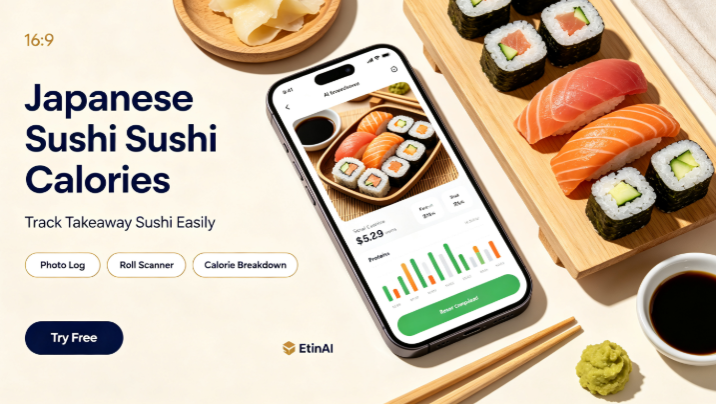
Japanese sushi is a hugely popular lunch and dinner choice across the UK. Many dieters pick sushi believing it is naturally low-calorie and perfect for a calorie deficit. While raw fish, seaweed and vegetables are nutrient-dense, most people overlook critical sources of hidden calories: sticky white sushi rice, creamy mayo fillings, tempura batter, sweet sauces and avocado. Standard food trackers often only offer generic sushi entries and cannot distinguish between sashimi, maki rolls, tempura sushi and dragon rolls. With EtinAI’s AI food recognition tool, simply snap a photo of your sushi platter to receive accurate nutrition breakdowns, allowing you to enjoy Japanese cuisine mindfully without stalling your weight loss progress.
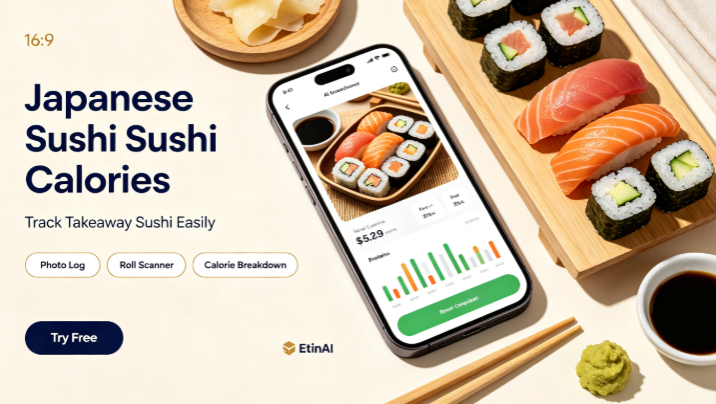
The biggest sushi calorie trap comes from inconsistent portions and rich toppings. Two seemingly similar sushi rolls can have a massive calorie difference. Reliable visual tracking helps you tell low-calorie options apart from calorie-heavy menu picks.
Common Mistakes When Tracking Sushi Calories
Countless health-conscious diners in the UK repeatedly make these tracking errors when ordering Japanese food:
Believing all sushi equals healthy low-calorie food Plain sashimi contains minimal calories, but fried tempura rolls, rolls filled with mayonnaise and drizzled with sweet unagi sauce are far more calorie-dense than many takeaway meals.
Underestimating the calories in sushi rice Sushi rice is seasoned with sugar and rice vinegar. Rice forms the base of every maki roll and contributes most of the carbohydrates and calories. Many dieters only count fish and ignore rice portions.
Mixing up sashimi, nigiri and loaded maki rolls Most nutrition databases group all “sushi” together. A plate of pure raw fish sashimi cannot be compared to large speciality rolls packed with avocado, cream cheese and crispy tempura.
Forgetting extra sauces and sides Salad ginger is low calorie, but creamy wasabi mayo, sweet teriyaki sauce, prawn tempura and gyoza add significant extra energy that people rarely log alongside their sushi order.
Average Calorie Reference For Popular Japanese Sushi Items
Practical baseline calorie values for quick reference (single piece standard size):
• Salmon/Tuna Sashimi (1 piece): ~25–35 Cal • Plain Fish Nigiri (1 piece): ~40–60 Cal • Vegetable cucumber maki roll (6 pieces): ~160–210 Cal • Salmon avocado maki roll (6 pieces): ~240–300 Cal • Tempura prawn sushi roll (6 pieces): ~320–420 Cal • Dragon roll Eel unagi roll (6 pieces): ~350–450 Cal
A full mixed sushi platter can easily reach 700–1000 calories. If you aim to maintain a calorie deficit, selecting the correct combination of rolls makes all the difference.
How To Choose Lower-Calorie Sushi When Dining Out
Knowing the calorie differences helps you order wisely before you eat:
Opt for sashimi or simple nigiri instead of large multi-ingredient special rolls. Avoid options marked tempura, crispy, creamy or dragon roll. Ask for sauces on the side to control how much sweet, oily dressing you consume. Vegetable rolls are lighter than seafood and avocado combinations.
Remember: soy sauce itself is low calorie, but sugary thick sauces are where hidden calories hide in Japanese restaurants.
EtinAI: Instantly Log Sushi Platters With One Photograph
EtinAI removes the guesswork of tracking mixed Japanese takeaway meals with advanced AI visual food scanning, built for UK food lovers.
Snap a photo of your sushi plate for automatic nutrition analysis Capture your sushi platter, mixed maki rolls or sashimi set. The AI identifies different sushi varieties, estimates portions and calculates total calories, fat and carbs in seconds. No need to manually look up every single roll on the menu.
Works for mixed takeaway sets If your order includes gyoza, miso soup, seaweed salad alongside sushi, the AI recognises every food on the plate. You get one complete meal log rather than adding items one by one manually.
Perfect for lunch takeaway routines Sushi is a frequent office lunch choice. Log your meal immediately after collecting your takeaway, so you never forget to record your lunch calories later in the day.
Enjoy Sushi While Protecting Your Calorie Deficit
EtinAI follows a balanced, non-judgemental nutrition tracking philosophy suitable for British users.
You do not need to cut sushi completely from your weekly diet. Weight management depends on long-term eating trends, not eliminating favourite takeaways. The app never labels sushi as “good” or “bad”; it simply shows you how each choice impacts your daily calorie target.
Strict diets that ban takeaway food are unsustainable. Honest tracking allows you to plan for sushi meals so you can stay consistent with your fitness goals.
Top Practical Tips For Sushi Lovers On A Weight Loss Plan
These simple adjustments keep calories under control:
• Prioritise sashimi and simple nigiri over loaded special rolls • Limit creamy tempura rolls to occasional treats • Avoid finishing all sweet unagi and mayo sauces • Skip extra fried Japanese sides such as tempura and spring rolls • Share large platters or choose smaller lunch-sized sets
Use EtinAI to compare different sushi combinations and discover which menu options fit comfortably within your daily calorie budget.
Track International Takeaway Food Easily With AI Food Logging
Stop guessing sushi calories or scrolling through incomplete food databases. AI photo tracking delivers fast, reliable nutrition estimates for sushi and all your favourite global takeaway dishes.
Download EtinAI and activate your 30-day full-feature free trial. Photograph sushi, lunch takeaways and snacks, view instant nutrition analysis, and build sustainable balanced eating habits.
Comments
Leave a Comment