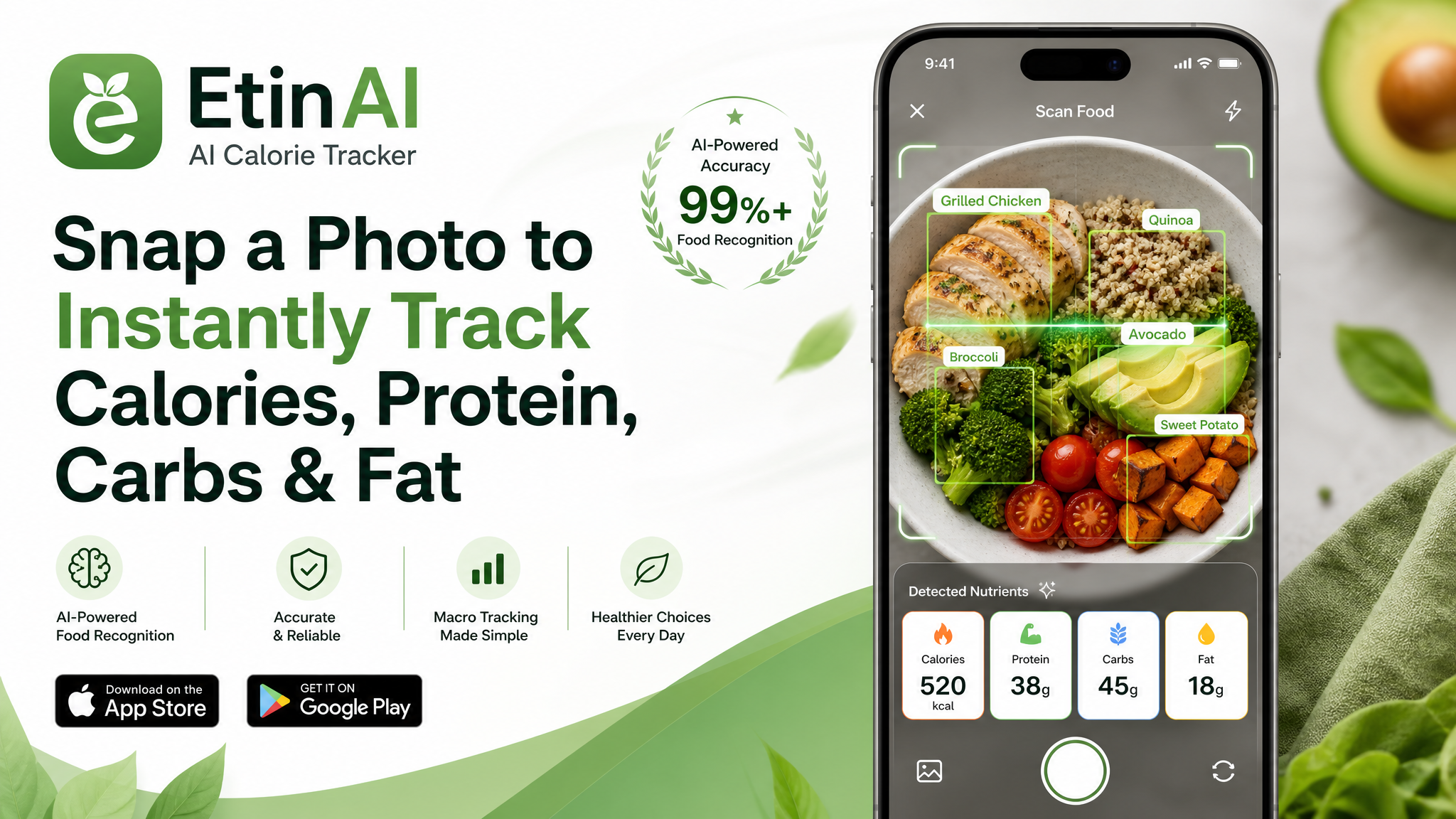
Tracking calories manually is a pain. You weigh every bite, look up entries in a clunky database, second-guess the portion size, and eventually give up after three days. The core problem isn't motivation—it's friction. EtinAI tries to remove that friction entirely: point your phone at a plate, snap a photo, and it tells you the calories, protein, carbs, and fat. No typing, no guessing (well, less guessing).
How It Actually Works
You open the app, take a picture of your food, and wait a few seconds. The AI identifies the items and estimates their nutritional breakdown. I tested it on a straightforward lunch: grilled chicken, white rice, steamed broccoli. It correctly identified all three components and gave me reasonable numbers—around 400 calories, 35g protein, 45g carbs. For a bowl of mixed fruit, it recognized the banana and strawberries but missed the blueberries entirely. The portion size estimate is the trickiest part. A teaspoon of peanut butter vs. a tablespoon? The AI guessed conservatively low.
The real strength is speed. A typical manual entry in MyFitnessPal might take 30–60 seconds if you know the exact product. With EtinAI, it's under ten seconds for a recognizable meal. That convenience matters more than you'd think for building a consistent logging habit.
The Tradeoffs You Need to Know
Accuracy is the obvious concern. EtinAI works best on distinct, well-lit foods on a plain plate. A complex dish like a stir-fry with multiple sauces? It'll probably lump everything as "mixed vegetables" or misjudge the oil content. I’ve seen it call a salad with ranch dressing "lettuce-only" and ignore the dressing entirely. For protein tracking, it’s decent with recognizable cuts of meat but struggles with prepared dishes like meatballs or casseroles.
Another limitation: no barcode scanning or custom recipe input (yet). If you eat packaged foods often, you’re still better off with a traditional tracker. And if you’re someone who weighs every gram to hit precise macros, the AI’s visual estimation will frustrate you. The margin of error is probably ±20% on many meals.
Who Should Actually Use This
EtinAI is for people who want to track but hate the overhead. If your problem is starting (and stopping) because logging feels like a chore, this removes the biggest barrier. It’s also useful for restaurant meals where you don’t have packaging or a scale—just snap and get a ballpark number.
On the flip side, if you're deep into bodybuilding prep or have a medical condition requiring exact carb counts, stick with a scale and a database. The AI is a tool for consistency, not precision. For most people, consistent ballpark tracking beats intermittent exact tracking.
Bottom line: EtinAI makes logging almost effortless, but it asks you to accept some uncertainty in return. If that tradeoff works for your goals, it’s worth a try.
Comments
Leave a Comment