It sounds counterintuitive: I've used six or seven diet tracking apps over time, and at my most obsessive, I weighed every meal to the gram and counted calories down to the single digit. But instead of losing weight, I got hungrier the more I counted, binged the more I restrained, and gained nearly ten pounds.
In the end, I deleted all those apps and thought, forget it, I'll just get fat—better than losing my mind. Then, recently, I casually started using EtinAI to snap photos for fun. No goals, no forcing myself to check in. I even often forgot to open it for two or three days. Yet, my weight quietly started dropping.
That's when I realized: most people can't lose weight not because they aren't calculating accurately enough, but because they're calculating too hard and making themselves anxious.
The old me, counting calories, felt like walking a tightrope
I don't know if you've ever felt this way: you start off wanting to control your diet a little, but then you get more and more obsessed.
Every meal had to be weighed raw—adjusting even for a five-gram difference. Before putting a single snack in my mouth, I'd first search its calories. If I forgot to log a meal, I'd feel restless all day, thinking it was all ruined, then throw caution to the wind and binge on a big takeout order at night.
I wanted to manage my body, but instead, I ended up being held hostage by numbers. My eyes were only on that string of calorie numbers, unable to taste whether the food was good or not. Guilt for eating an extra bite, glee for eating less—my emotions were all over the place, following the numbers up and down. It was exhausting.
What's more ironic: the more I restrained, the more I craved. Foods I never liked before, like cookies and cakes, became branded as "high-calorie, forbidden," and I thought about them every day. Once I broke the rules, I couldn't stop, and then fell into deeper self-blame—a vicious cycle.
Back then, I always felt it was my lack of willpower, that I wasn't calculating precisely enough. Now I understand: it was precisely this "must be perfect" harshness that pushed me further away.
What makes it great: it doesn't hold you hostage
When I first started using EtinAI, I felt really uncomfortable.
You open it and see the camera view. No prompts to fill in your height and weight to calculate basal metabolism, no mandatory daily calorie target, no check-in calendar, no streak rankings, not even a progress bar for "today's completion."
The first time I used it, I kept looking around: "Where's my daily goal? How do I see what percentage of my intake I've eaten today?" After searching for a while, I realized it simply doesn't exist.
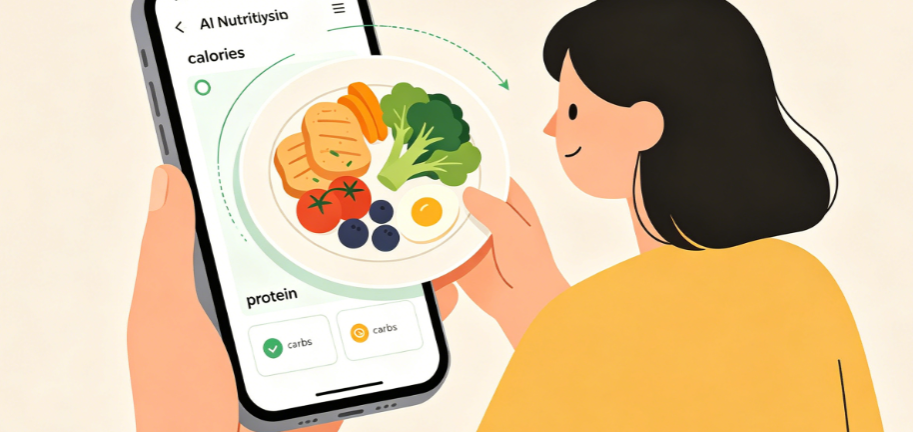
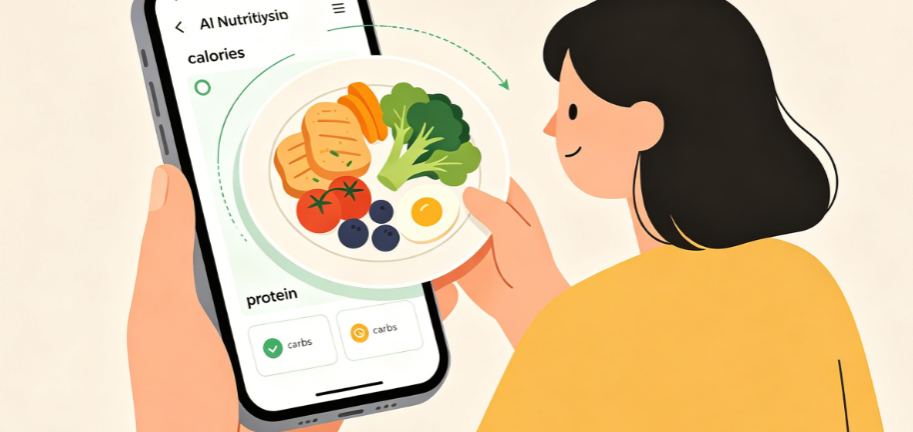
When you remember before a meal, you snap a photo. Three seconds later, the results come out—calories, protein, carbs, all clearly listed. If you forget or don't feel like recording, no problem. It won't send notifications to nag you, nor will it say "You've broken your streak" if you miss a few days. It sits quietly on your phone, ready when you want it, and never makes a fuss when you don't.
At first, I kept my old habit of snapping every meal, afraid to miss one. Later, I went out with friends for the weekend and didn't open it all day. In the past, I would have been anxious out of my mind, but that day I felt completely calm—after all, no one was pushing me, no one was grading me. Forget it, no big deal.
Because there was no pressure, I just kept using it afterward. Before I knew it, I'd been using it for over a month—something I'd never achieved with any previous calorie app.
When you stop staring at numbers, losing weight becomes easier
It's oddly wonderful: back when I counted calories every day, I only saw one number, and my eating got messier. Now, I don't fixate on total calories, and I've slowly gotten to know my own body.
After snapping photos casually for a while, without even trying to remember, I have a rough idea: that afternoon milk tea is worth almost half a meal; that big plate of veggies I ate—I actually didn't get enough protein, no wonder I was hungry two hours later; I always thought I ate little, but the oil and sauce in the dishes actually have more calories than the staple food.
No need to force myself to hit a certain calorie count, no need to strictly stick to macro ratios. Just by taking many photos, I slowly learned what fills me up, what leaves me hungry soon after, and what foods are calorie-dense so a little goes a long way.
If I want cake, I buy a slice, snap a photo to see roughly how many calories, and eat lighter the next day to balance it out. I no longer indulge in the "I've already eaten it, might as well go all out" mentality. When friends invite me for hotpot, I go with confidence, scoop out some veggies, take a photo, and have a general idea—no more days of anxiety over one meal.
It's like a soft measuring tape without markings. It's not there to judge you, just to give you a rough sense. There's no target you must hit, no passing grade, so naturally, there's no "failure."
To be honest: if you need extreme precision, don't buy it
Of course, it's not perfect. A few things need to be said upfront.
If you're prepping for a bodybuilding competition and need accuracy down to every gram of nutrients, it won't be enough. Stick with a food scale for that. For thick soups or congee where ingredients are completely mixed, it can only calculate total calories, not break down the weight of each ingredient. It also can't recognize packaged snacks and drinks through the wrapper; you'll need to pour them out.
But for everyday people, it's more than enough.
What most of us need when managing our diet isn't numbers precise to the single digit—it's a way that can be sustained long-term without creating anxiety. Too much precision becomes a burden, and when it's a burden, you can't keep it up, and if you can't keep it up, it's all for nothing.
As for ads and fees: same as before—I haven't seen a single pop-up ad since I started using it. Core features like everyday photo recognition, viewing nutritional info, and saving diet records are all free. The advanced analytics are tucked away, and unless you actively look for them, you won't even see them. There's zero pressure to subscribe. That kind of restraint is really rare these days.
One final honest word
More and more, I feel that the essence of managing your body is managing your relationship with food.
Before, I always treated food as an enemy and calories as a flood of beasts. The more I fought, the more out of control I became. Now, I've relaxed: food is just food. If it tastes good, enjoy it. Know roughly how many calories it has, keep that in mind, and don't burden it with so much right and wrong or guilt.
The best thing about EtinAI was never how accurately it calculates calories. It's that it turns "diet tracking" from a test of willpower into a light, easy little thing. It doesn't judge you, doesn't hold you hostage, doesn't push you to be perfect. It just quietly helps you understand a bit more about your own eating.
When you stop fighting with food and stop draining yourself over numbers, eating well becomes natural. And a good state of mind often comes from that.
If you've also been tortured by calorie tracking, getting more anxious the more you try to lose weight, and have tried all kinds of methods without being able to stick with them—really, give it a try. Don't go in with the goal of losing a certain number of pounds. Just think of it as a lighter way to eat well.
Comments
Leave a Comment