Does anyone else feel the same way I used to? I once treated "keeping your mouth shut" as the golden rule of weight loss, obsessively counting calories to the point of fanaticism.
Before eating a steamed bun, I had to check how many calories the filling had. A cup of milk tea had to be calculated in terms of how many kilometers I'd need to run to burn it off. Even one extra bite of rice would make me feel guilty for half the day. And the result? The stricter I controlled myself, the more likely I was to binge late at night, only to fall into deep self-blame afterwards. My weight fluctuated endlessly, my mindset crumbled first, and I could no longer enjoy a simple meal with pure happiness.
During that time, I switched between one diet tracking app after another on my phone. Every single one enforced a strict calorie limit, marking anything over as a red warning—like a harsh examiner constantly watching you. It wasn't until I grew completely tired of this tense state and tried EtinAI with a "delete it if it doesn't work" attitude that I slowly managed to correct my eating mentality, which had been twisted for years.
First, Throw Away the "Calorie Red Line"—Tracking Is Not About Judging Yourself
Before, with other apps, the first thing I did was input my height and weight. The system would automatically calculate a daily calorie limit I couldn't cross. One extra bite meant "over the limit." Over time, eating felt like completing a task—relief if I stayed within bounds, anxiety all day if I exceeded.
But what makes EtinAI different is that you don't have to set any goals at all. You don't need to enter your weight, set a weight loss plan, or even tell it your age or gender. It won't draw a red line you must not cross, and it won't scold you or flash warnings if you eat an extra piece of cake.
You simply record and observe what you eat—nothing more. No judgment, no right or wrong. When I first started using it, I still subconsciously checked if I had overeaten, but later I realized no one was judging me, so I gradually relaxed. Finally, I could eat without mentally calculating calories first to decide whether to eat or not.
No Need for Precision to the Last Calorie—A Rough Idea Is Enough
I used to believe that tracking food had to be precise to the gram—even a few dozen calories off wasn't acceptable. For the sake of this so-called precision, I'd buy a kitchen scale, look up nutrition tables, and spend over ten minutes on a single meal. It was exhausting and made me prone to giving up.
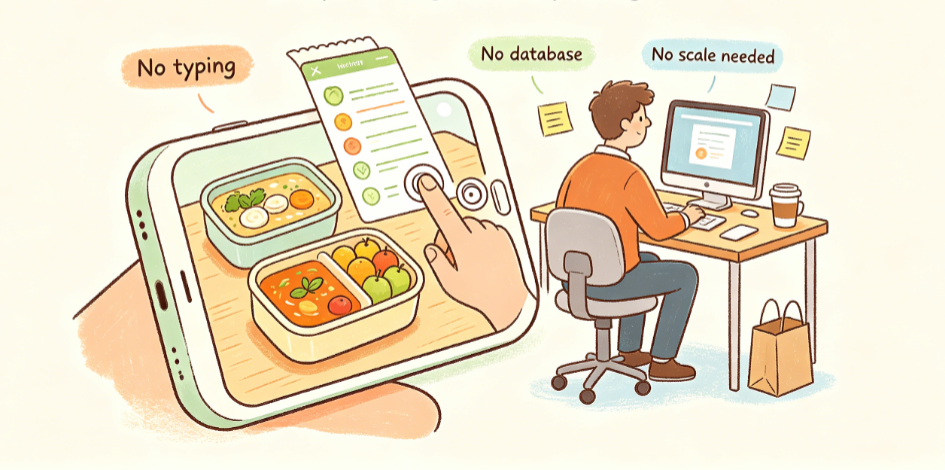
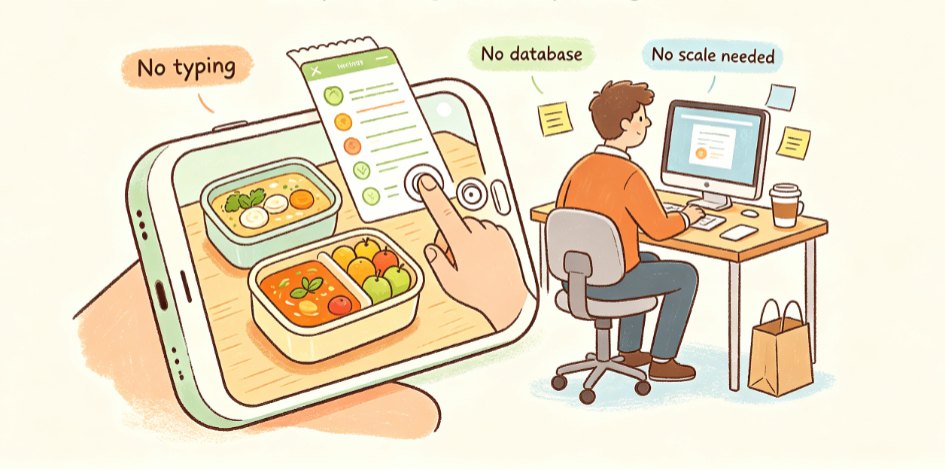
After using EtinAI, I realized that for ordinary people, "a rough idea" is far more useful than "absolute precision." Take a photo, and the AI estimates the approximate calories and nutrient ratio. There are certainly errors, but it's enough to help you build dietary awareness.
You don't need to agonize over whether a bowl of noodles is 500 or 600 calories. Just knowing it's not low in calories is enough—don't eat it every meal, and don't overdo it. Precision that you can't sustain for three days is less useful than a little inaccuracy that allows you to track consistently over the long term. That's what truly helps.
And precisely because I don't have to pursue 100% accuracy, I've shed the mental burden. I just snap a photo whenever I think of it, without pressure, and that has helped me stick with it for a long time.
Seeing Your Eating Habits Is More Useful Than Forcibly Controlling Them
In the past, I was always fixated on the daily calorie numbers, obsessed with "eat less, lose fat," but I never actually looked at how I was eating.
After using EtinAI for a few weeks, I discovered that I always craved snacks around 3 or 4 in the afternoon. It wasn't because I was hungry—it was because I ate too many carbs in the morning and not enough protein at lunch, causing my blood sugar to drop quickly and making me crave food.
Once I found the cause, I didn't force myself to stop snacking. I simply added an extra egg or a portion of meat at lunch and cut back on sweet drinks in the morning. Before long, the afternoon cravings disappeared on their own, without any willpower required.
Many times, it's not that we lack self-discipline—it's that we don't see where the problem lies. EtinAI is like a mirror, putting the eating habits you usually overlook right in front of you. Once you see the issue, adjustment comes naturally, without the need for extreme dieting.
The Goal of Eating Well Has Never Been About Being Thin
I used to think that tracking food was all about losing weight and getting thin. But the longer I use it, the more I understand that eating well is ultimately about feeling good.
I still use it to track now, but I no longer feel guilty for having an extra hotpot meal. If I want to eat, I eat. Afterward, I snap a photo, realize this meal was a bit oily, and then keep the next two meals light. Food is no longer an enemy or a desire to be restrained—it's just something ordinary that brings joy.
My weight hasn't swung wildly up or down; instead, it's stabilized in a comfortable range. My stomach no longer acts up, and I don't否定 myself for eating something sweet. My overall state is much more relaxed than when I was dieting and counting calories every day.
A Final Heartfelt Word
If you're currently stuck in a cycle of "dieting—bingeing—guilt," where you can't help but count calories when you eat and scold yourself for lacking discipline when you overeat, I strongly suggest you try a different approach.
Don't force extreme discipline on yourself. Don't set harsh weight loss goals. Just use EtinAI to quietly track for a while. Stop fixating on calorie numbers and instead look at your eating habits and listen to your body's hunger and fullness signals.
It's not some magic weight loss tool—in fact, for fitness enthusiasts chasing pinpoint accuracy, it might even seem "imprecise." But for ordinary people who want to make peace with food and quit dietary mental drain, this non-judgmental, non-restrictive sense of ease is the most precious thing.
After all, we eat to live well, not to keep staring at the scale.
Comments
Leave a Comment