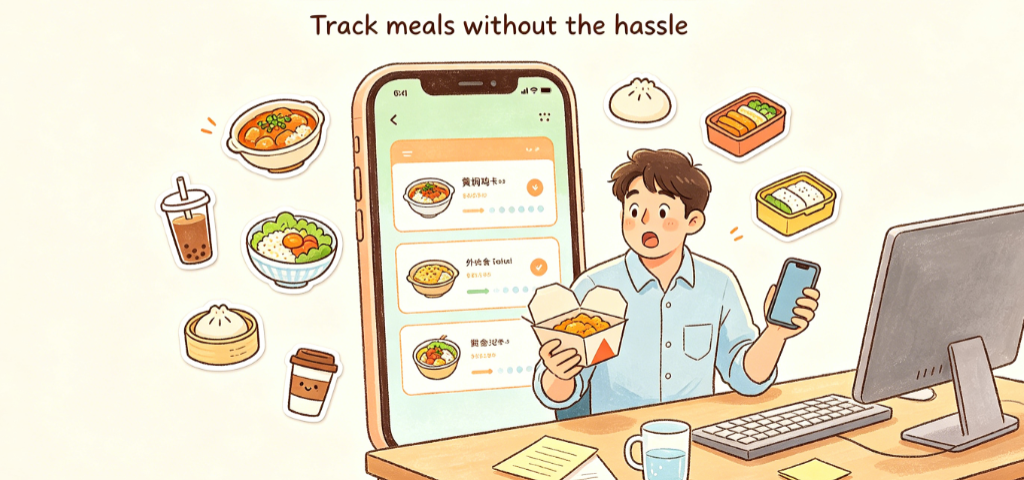
Let me ask you first: Is there anyone like me, who relies on takeout for basically all three meals on workdays, and after a while, always feels something off?
It’s not a major problem, just that after eating, I always feel a bit bloated, I’m drowsy and can’t keep my eyes open at 3 p.m., and my face gets oily and breaks out. I used to blame it on staying up late or stress, but after I started using EtinAI to record my meals, I realized the problem was mostly in what I ate every day.
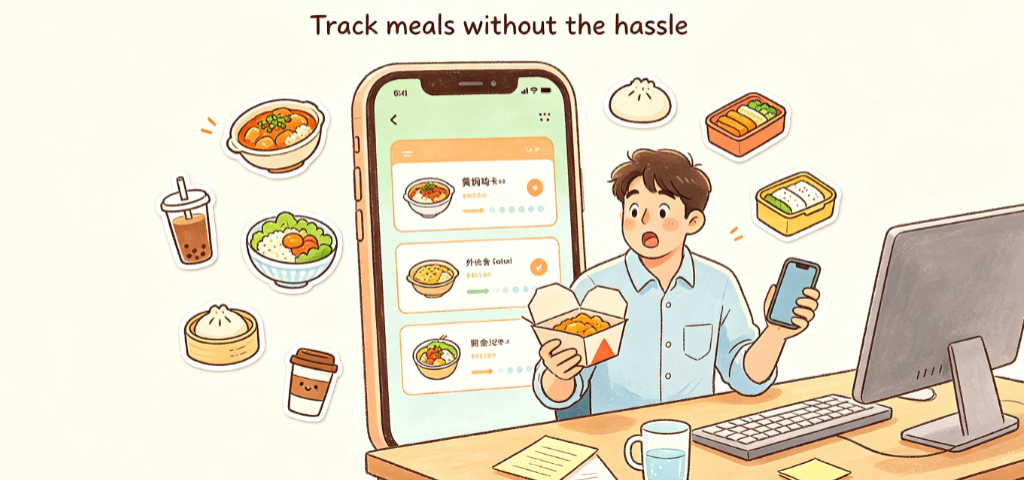
I had thought about adjusting my diet before, but either I had to buy a food scale and weigh everything, or I had to scroll through an app’s ingredient database for ages, spending ten minutes logging a single meal. Work is exhausting enough already—who has the time for that? So when I first started using EtinAI, I didn’t have high expectations. I just wanted the convenience of snapping a photo to log. I didn’t expect that after a month, it really straightened out my messy eating habits quite a bit.
First thing: Uncovering the “hidden traps” in my meals
Before, I used to order takeout by gut feeling, thinking, “If I don’t order fried food, it’s healthy.” But after logging, I found that many seemingly light dishes were packed with calories, oil, and salt.
For example, the tomato and egg rice I often ordered. I thought it was refreshing with its sweet and sour taste, but when I photographed it, I found that one serving had nearly 700 calories and plenty of oil. No wonder I always felt greasy after eating it. And the free soup that shops often give as a side? I used to drink it all, but later I realized the soup had an absurd amount of salt and starch—I’d be thirsty all afternoon.
The most striking was milk tea. I used to think, “It’s just a sweet drink,” and had one with full sugar every day. After logging it, I was shocked: a cup of milk tea had almost as many calories as half a meal, and the sugar content directly exceeded the daily recommended intake. So I gradually switched to 30% sugar, from one cup a day to two cups a week. Before long, I noticed less oil on my face and no sudden heart palpitations or shaky hands in the afternoon.
I never noticed these things before. I always thought, “I haven’t been eating badly,” but when it was laid out in front of me, I realized all the pitfalls I’d unknowingly stepped into.
Second thing: Finally developed a sense of portion control
Before, when ordering takeout, my eyes were always bigger than my stomach. I wanted to order everything, ended up leaving leftovers, or forced myself to finish and felt uncomfortably full all afternoon.
After logging with EtinAI a few times, I gradually figured out how many calories I need per meal to feel comfortable. For lunch, with rice and toppings, 500–600 calories is enough, and I won’t be hungry in the afternoon. If I order soup and a main dish, I shouldn’t add snacks, or I’ll definitely overeat.
No need for strict dieting or forcing myself to eat salads. I just pay a little attention when ordering, know the rough amounts, and I neither waste food nor overeat. Before, after lunch, I’d have to lie on the table for half an hour to recover. Now, I’m just about 70% full, can walk around a bit to digest, and I’m not drowsy in the afternoon.
There was an unexpected bonus: Before, I couldn’t resist buying snacks on the way home from work. Now that I know how much I’ve eaten in a day, I don’t get cravings and buy things aimlessly, saving a lot of unnecessary expenses.
Third thing: Minor issues really decreased
It might sound exaggerated, but after just over a month of adjustments, the small physical changes were quite noticeable.
The most obvious was my stomach. Before, after eating takeout, I often had acid reflux and bloating. Now, when ordering, I deliberately avoid particularly greasy or spicy dishes, and add notes to reduce salt and oil. The stomach troubles became fewer and fewer, and I no longer need to carry stomach medicine to work every day.
Then there was my afternoon state. Before, lunch was always white rice with heavy, oily dishes, and all the blood rushed to my stomach, leaving me so drowsy in the afternoon I couldn’t lift my head. Now, I purposely add an extra serving of greens, an egg or chicken leg—less carbs, more protein and vegetables. My energy in the afternoon has noticeably improved, and I don’t need two cups of coffee to get through.
Even my skin stabilized. Before, with so much sugar, my chin kept breaking out in acne. Now that I’ve controlled milk tea and sweets, breakouts are fewer, and even the oiliness has lessened.
These are all small changes, but together, my overall state has become much fresher.
Finally, let’s be real: don’t expect too much from it
Some people will surely ask: Is it accurate? Is it necessary to get a membership? I’ll be honest.
Accuracy is definitely not as good as a food scale, especially for mixed-ingredient dishes like ma la tang or dry pot—there are bound to be errors. But for us ordinary office workers, it’s more than enough. We’re not training for a competition or needing precision down to every gram and calorie. We just need a rough reference to know which meal had too much oil or too few veggies, and adjust accordingly.
People who insist on 100% accuracy probably won’t stick with it anyway, and it only adds anxiety.
I didn’t get a membership. The free version is plenty for three meals a day plus a small snack. It has the core features: photo recognition, calories, and macronutrients. There are no pop-up ads, so it’s clean to use. The paid features—more detailed micronutrient analysis and data export—aren’t really needed for everyday tracking.
And most importantly: don’t treat it as a weight loss tool. Treat it as a food diary. Don’t force yourself to hit targets every day. Don’t feel guilty for eating an extra piece of cake. It just helps you see the eating habits you usually overlook. Whether you change them and how, it’s entirely up to what feels comfortable for you.
If you’re also an office worker eating takeout every day, feeling some minor discomfort but don’t know where to start, and find complicated diet plans too much trouble, you can really give EtinAI a try.
No need for deliberate self-discipline, no need to calculate everything. Just snap a photo casually, gradually get to know your own eating rhythm, make your diet a little more comfortable, and your body will naturally give you feedback.
After all, eating well is the most cost-effective kind of self-care.
Comments
Leave a Comment