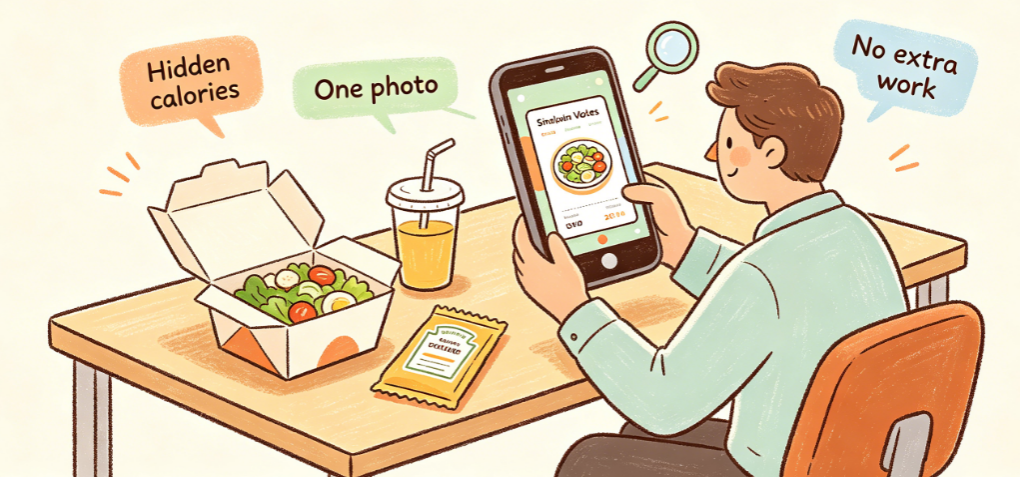
Let me be real: the pitfalls I've encountered trying to track my diet before are too many to count.
First, I jumped on the bandwagon and bought a kitchen food scale, vowing to weigh every meal. But after three uses, it ended up gathering dust in the cupboard—there's no way I'd bring a scale to work; that's way too embarrassing. Then I downloaded four or five calorie tracking apps, but entering a steamed bun meant scrolling through a database for five minutes, choosing between pork and chive or cabbage filling, then estimating the grams. By the time I was done selecting, I'd already eaten half the bun. Recording a meal took longer than eating it, so I ended up uninstalling them all.
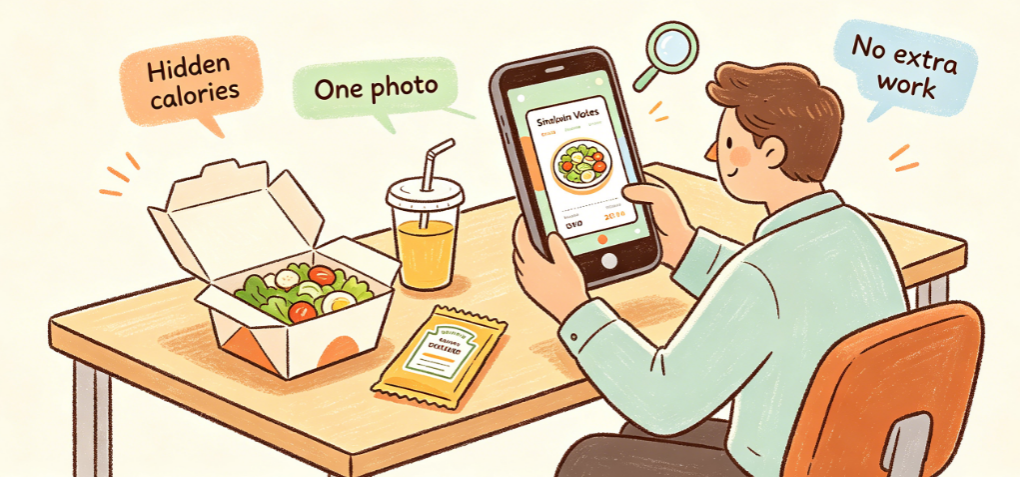
So when I first came across EtinAI, my initial reaction was, "Another gimmick." A photo to calculate calories? No way it's that easy. I downloaded it with the mindset of "I'll delete it in a couple of days," but unexpectedly, I've stuck with it for over two months, making it one of the few tools on my phone that I haven't cleaned out.
How does it hold up in everyday eating scenarios?
My daily meals are pretty routine: breakfast from the convenience store downstairs, lunch delivery at work, occasionally bringing my own food, and weekend dinners out with friends. Let me go through each everyday scenario and share my honest experience.
Mornings are the most convenient when I'm in a hurry. Just snap a photo of a bun and a cup of soy milk with the packaging—no need to search for product names. By the time I've paid, it's already recognized. I can snap and walk without delaying my commute. I used to think a bun didn't have many calories, but I later learned that a single meat bun is almost 200 kcal. Paired with soy milk in the morning, that's nearly 400 kcal. No wonder I never felt hungry at noon before.
Ordering takeout at noon is also hassle-free. Whether it's braised chicken, rice bowl, or salad, just open the lid and snap a photo. I used to ignore the calories from salad dressing, but after snapping, I found that a small pack of Caesar dressing is over 200 kcal. Now I ask for dressing on the side and use just a little, unknowingly cutting out a lot of hidden calories. Even the pickled veggies that come with takeout can be recognized—I really didn't expect that.
Bringing my own lunch is even simpler. Just snap a photo of the bento box in the morning; no need to weigh each ingredient separately. It estimates the portion reasonably well. For someone like me who packs lunch just for convenience, it's more than enough.
The most useful feature is actually for weekend gatherings. Before, when I went out for hotpot or BBQ with friends, I'd always worry afterward about overeating, feeling guilty, and then I'd just give up and eat a late-night snack. Now, while everyone is chatting, I just snap a photo of what I've put in my bowl. I have a rough idea, eat and drink without guilt, and don't stress over a single meal.
After all, eating out is supposed to be fun. Constantly calculating calories takes the joy out of it.
The questions everyone cares about most, I'll answer honestly.
Many friends ask me two things most often: "Is it accurate?" and "Do I have to pay?" Let me be straightforward.
First, accuracy.
It's definitely not as precise as a kitchen scale—a difference of tens of calories is common, especially with soups, stews, or mixed dishes like spicy hot pot or malatang, where the error can be larger. But for ordinary people, I think it's really unnecessary to obsess over those tens of calories.
We're not bodybuilders preparing for a competition that requires precision to the gram. What we need is a rough reference. Knowing I didn't eat enough vegetables today, I'll add more tomorrow; knowing this meal was oily, I'll go lighter next time—that's enough. It's better to have some inaccuracy but keep tracking daily than to be perfectly accurate but give up after three days. Everyone knows which is more useful.
Now about whether you need to spend money.
I've been using it for over two months without spending a penny. The free version is more than sufficient. Three meals a day plus an afternoon snack—the number of recognitions is plenty. There's no pop-up ad asking for payment. The membership option is hidden in settings; you'd have to look hard to find it.
I specifically checked the paid version's features. It adds micronutrient analysis, data export, longer history logs—things that aren't needed for everyday recording. Unless you need meticulous dietary management, the free version is enough.
Another thing I really like is that it's not annoying. No check-in reminders, no daily goal notifications, no constant messages saying "You've exceeded your calorie limit today." You can record when you want, or skip it without any guilt. The reason I uninstalled previous apps was precisely because of those relentless check-in reminders.
Finally, a heartfelt word.
Actually, I still don't consider it a weight loss tool. It's just a handy helper that makes things easier for me.
I used to think that tracking diet was a bothersome task requiring a lot of self-discipline—preparing a scale, looking up data, calculating calories—an ordinary person couldn't keep it up. But after using EtinAI, I realized it doesn't have to be that complicated.
It's just a matter of snapping a photo. No brain work, no pressure. Gradually, I've come to understand my eating habits. I know what's high in calories and what makes me feel good. Without strict dieting, just a few adjustments, and my overall state has changed.
If you're like me—an ordinary office worker who wants to pay a bit of attention to your diet but finds it too bothersome and worries about not sticking with it—then give this a try. It's free to download, so you have nothing to lose.
But if you need extremely precise calorie control and demand 100% accuracy, then you'd better buy a food scale. This app won't meet your needs.
Tools—the best one is the one that suits you and that you can keep using.
Comments
Leave a Comment